
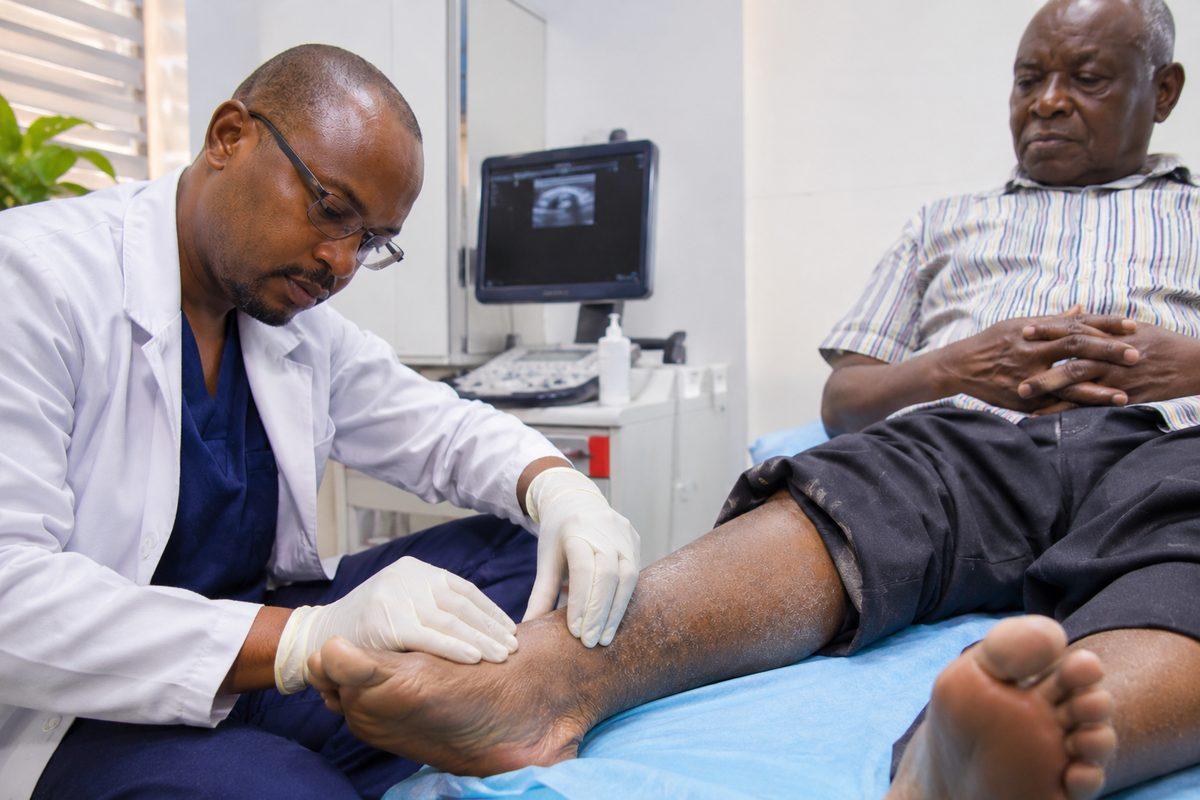
On World Diabetes Day, a vascular surgeon explains why diabetes puts feet at risk, the warning signs that should never wait, and the simple daily habits that prevent most diabetic foot ulcers and amputations.
Some of the hardest conversations I have as a surgeon take place beside a patient with a diabetic foot. Very often the story begins with something small: a blister from new shoes, a crack in the heel, a cut while trimming a nail, a burn from sitting too close to the jiko. Because the foot did not hurt, it was ignored. A week or two later, the patient arrives with a wound that is infected, smells, and has spread deep into the foot.
Today, 14 November, is World Diabetes Day. Most conversations about diabetes focus on blood sugar, tablets and insulin, and rightly so. But I want to talk about the part of the body that diabetes quietly puts at greatest risk, and that is easiest to forget: your feet.
Why diabetes puts your feet at risk
Diabetes damages the feet in three main ways, and they usually work together.
- Nerve damage (neuropathy). Over time, raised blood sugar damages the nerves, starting in the feet. Many people feel tingling, burning or numbness. Others feel nothing at all. Without the warning signal of pain, a stone in a shoe, a blister or a burn can go unnoticed for days.
- Poor circulation (peripheral arterial disease). Diabetes speeds up narrowing and hardening of the arteries in the legs, especially below the knee. With less blood reaching the foot, even a small wound struggles to heal, and infection is harder to fight.
- Lowered resistance to infection. High blood sugar weakens the body's defences. An infection that would stay small in someone without diabetes can spread quickly through the tissues of the foot, sometimes within a day or two.
Nerve damage also changes the shape of the foot and the way weight is carried, creating pressure points where hard skin builds up and ulcers form underneath.
Why this matters so much
A diabetic foot ulcer is not a minor wound. A large proportion of people with diabetes will develop a foot ulcer at some point in their lives, and most amputations in people with diabetes begin with an ulcer that did not heal. Losing part of a leg changes a person's independence, work and family life, and carries serious risks to overall health.
The encouraging truth is that most of these ulcers and amputations can be prevented. Prevention is not complicated or expensive. It depends mainly on daily attention and on seeking help early.
Check your feet every day
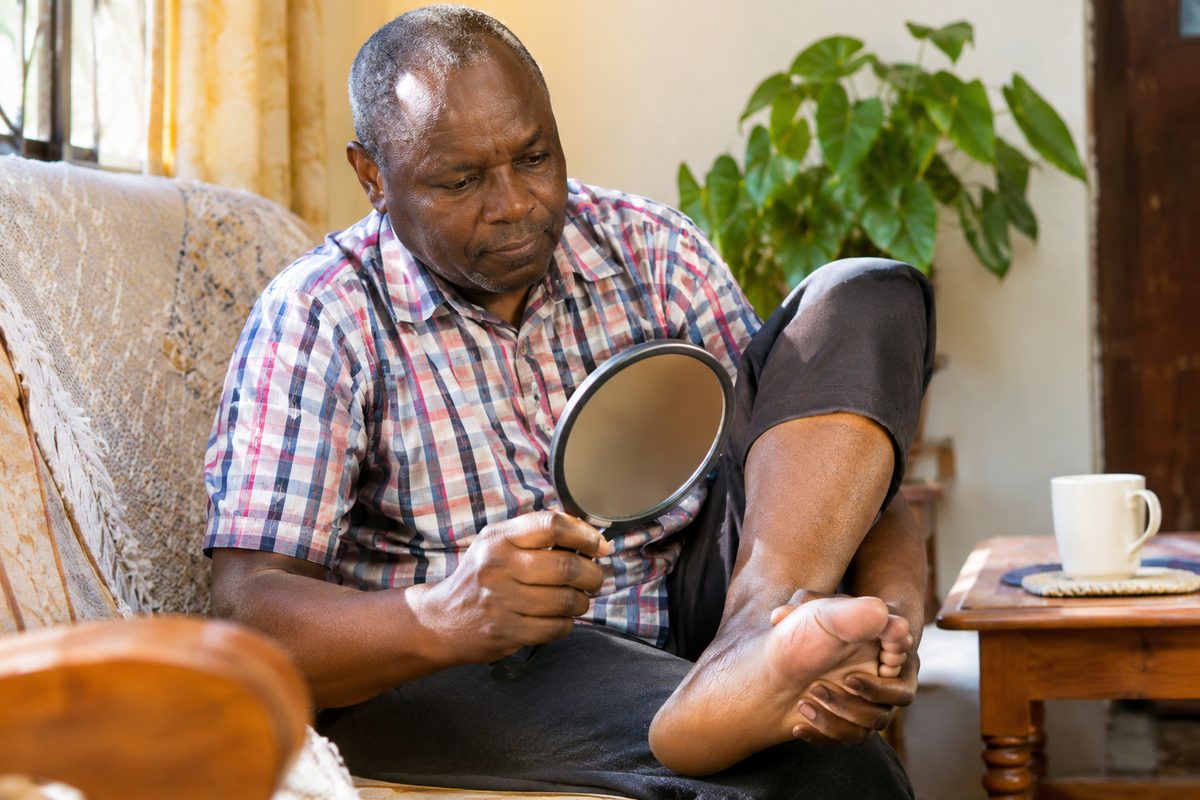
The single most important habit is a daily foot check. It takes less than two minutes.
- Look at both feet every day, including the soles, the heels and between the toes. Use a mirror, or ask a family member to look if you cannot see well or bend easily.
- Look for anything new: cuts, blisters, cracks, redness, swelling, hard skin, a change in colour, or a nail digging into the skin.
- Feel for warmth. One foot or one area that is warmer than the other can be an early sign of infection or inflammation.
- Check inside your shoes before putting them on. Run your hand inside to find stones, rough seams or anything sharp.
If you find a problem, do not wait to see whether it heals on its own.
Everyday foot care
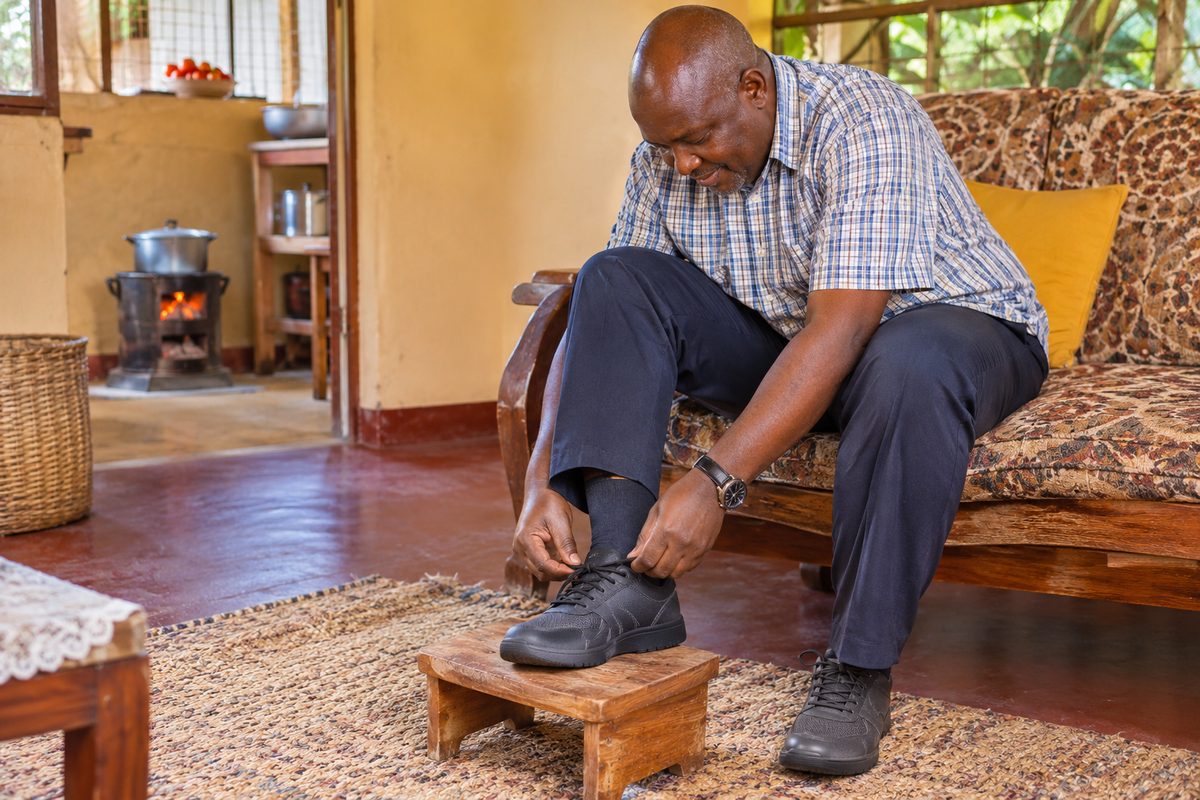
- Never walk barefoot, indoors or outdoors, including at home, at the beach and around the compound. Feet without feeling are easily injured.
- Wear well-fitting, closed shoes with soft socks. Avoid tight shoes, and break in new shoes slowly. Sandals and open shoes leave toes and heels exposed.
- Wash your feet daily with lukewarm water. Test the temperature with your elbow or a thermometer, not your foot. Dry carefully, especially between the toes.
- Moisturise dry, cracked heels, but not between the toes, where moisture encourages fungal infection.
- Cut nails straight across and file sharp edges. If you cannot see or reach your feet well, ask a family member or a health worker to help.
- Do not cut corns or hard skin yourself with razor blades, and do not use corn plasters containing acid. Let a health worker treat them.
- Keep your feet away from heat. Do not soak them in hot water, rest them near a jiko or fire, or use hot water bottles. Burns are a common and preventable cause of ulcers.
- Do not apply herbs, powders or home remedies to wounds on the feet.
Warning signs that should never wait
Seek medical care the same day if you notice:
- A wound, blister or ulcer that is not clearly healing within a few days
- Redness, warmth or swelling spreading across the foot
- Pus, discharge or a bad smell from a wound
- A toe or part of the foot turning dark, blue or black
- New pain in the foot or calf when walking, or pain at night that eases when you hang your leg over the side of the bed
- Fever, feeling unwell, or blood sugar that suddenly becomes difficult to control
An infected diabetic foot is an emergency. Early treatment may need only antibiotics and wound care. Treatment that comes too late may need surgery to remove dead or infected tissue, and sometimes amputation.
When circulation is the problem
As a vascular surgeon, I see many patients whose wounds will not heal because the blood supply to the foot is poor. Signs include cold feet, thin shiny skin, loss of hair on the legs, weak or absent foot pulses, and pain in the calf when walking.
Circulation can be assessed simply in the clinic, for example by feeling the pulses and comparing blood pressure at the ankle and the arm, followed by a Doppler ultrasound scan if needed. When arteries are narrowed or blocked, blood flow can often be improved with an angioplasty (opening the artery with a balloon, sometimes with a stent) or with bypass surgery. Restoring circulation can be the difference between a wound that heals and an amputation.
Control what you can
Foot care sits alongside the rest of diabetes care. Keeping blood sugar, blood pressure and cholesterol well controlled protects both nerves and arteries. Stopping smoking is one of the most powerful things you can do for your circulation. Regular walking improves blood flow, provided your shoes protect your feet. And every person with diabetes should have their feet examined by a health worker at least once a year, and more often if they have had ulcers or circulation problems before.
A message for families
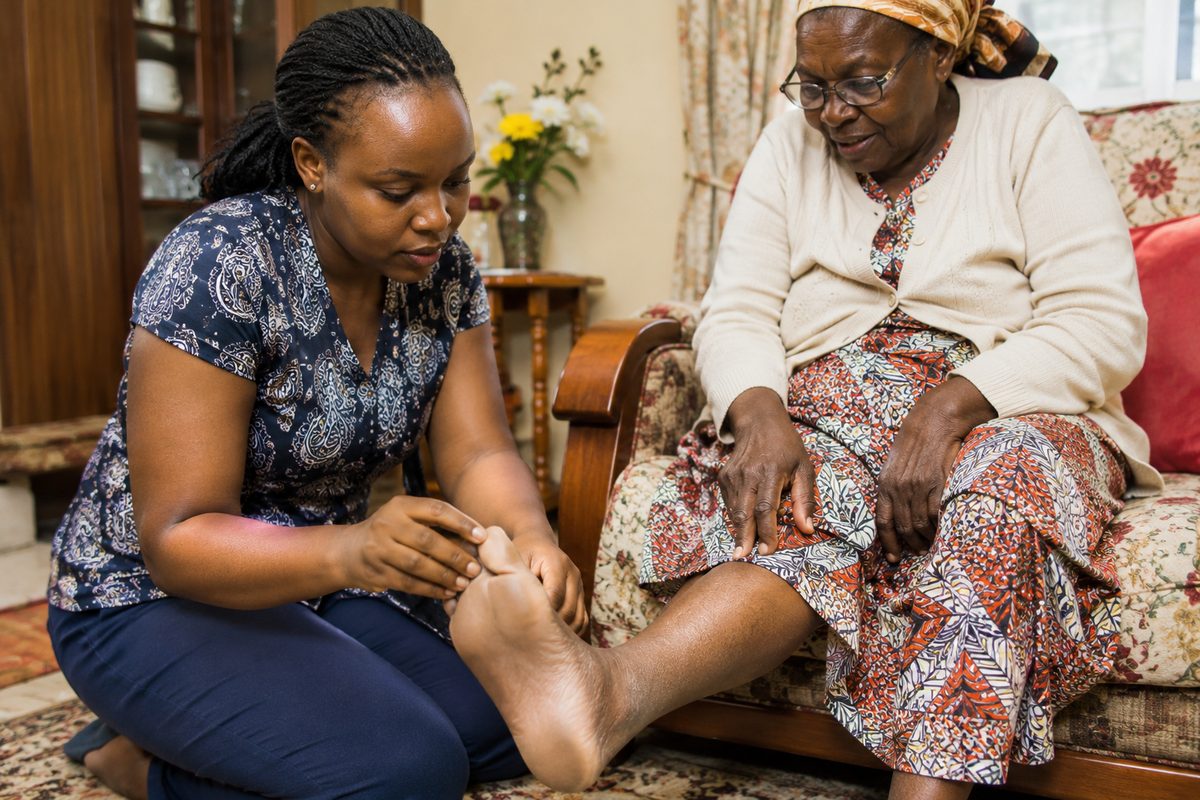
Families play a vital part. Many patients with long-standing diabetes have poor eyesight, stiff backs or knees, or simply cannot see the soles of their own feet. A son, daughter or spouse who checks a parent's feet each evening may prevent a hospital admission. If you notice a wound, a smell or a change in colour, take it seriously and seek help early.
Small checks, saved legs
Diabetes is a lifelong condition, but losing a leg is not an inevitable part of it. Two minutes a day looking at your feet, the right shoes, and acting early when something changes can protect your mobility, your independence and your life.
This World Diabetes Day, take off your shoes and socks and look at your feet. If you see something that worries you, do not wait. Early care saves legs.
This article is general information and does not replace individual medical advice. In an emergency, go to the nearest Accident & Emergency department.