Knowing our surgical capacity
Structured assessments of theatres, equipment, staff, blood and imaging, using tools developed for Kenyan hospitals, to guide investment where it matters most.
Evidence:Chaker 2025
Billions of people worldwide cannot get safe, affordable surgery when they need it, and sub-Saharan Africa carries a large share of that gap. At HealthPro Surgery, our work goes beyond the patients we treat. We study and advocate for what it takes to close the gap in Kenya: surgical capacity in public hospitals, training and keeping surgeons, safer emergency and perioperative care, and protecting patients from catastrophic costs.
Here we share the evidence we follow and the priorities we are pushing for in Kenyan referral hospitals. We update this page as new research is published.
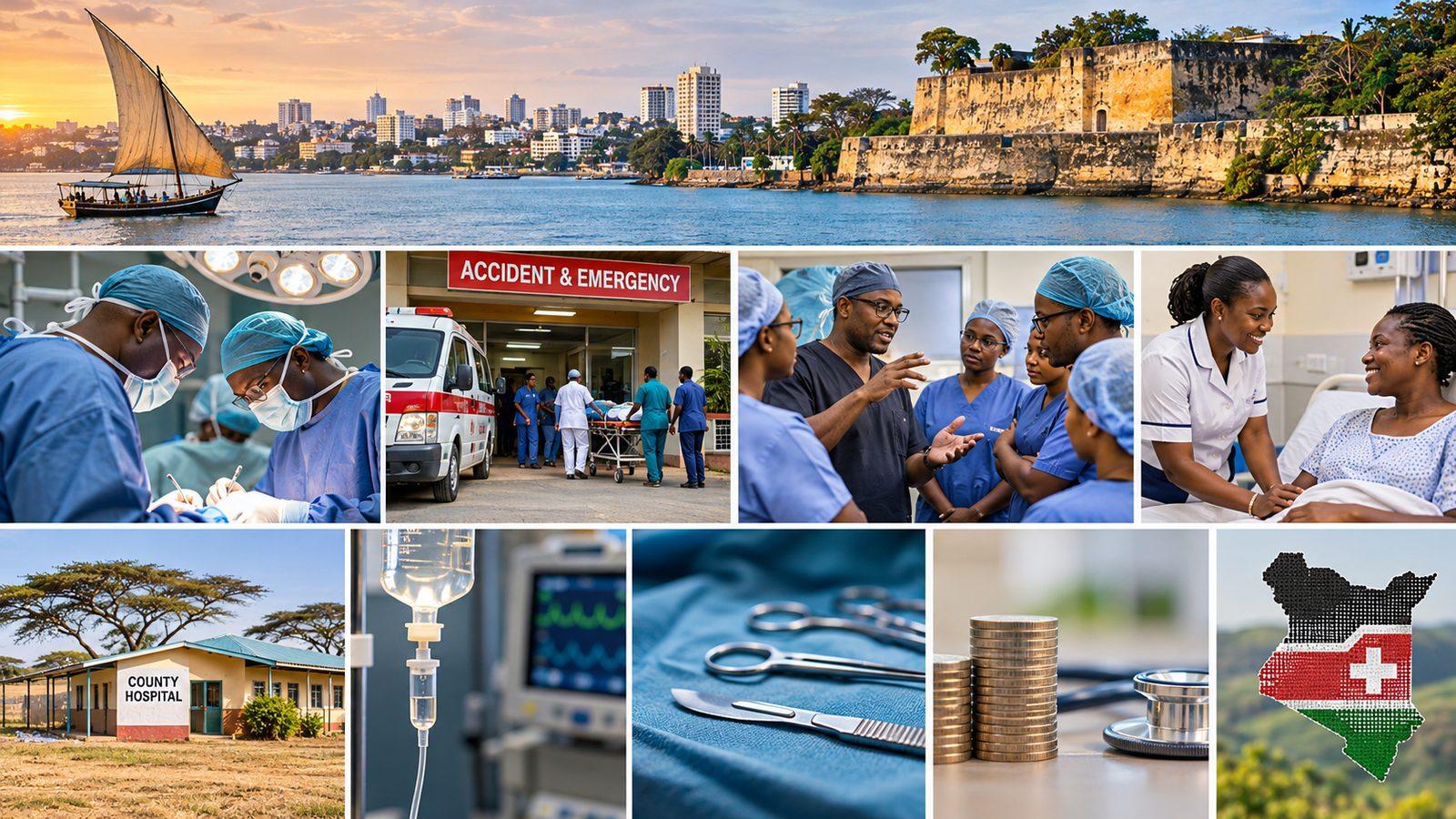
Understanding what county and referral hospitals can safely provide, and where patients fall through the gaps between them.
Training surgeons in Kenya through COSECSA, and creating the posts and conditions that keep them in the counties that need them.
Trauma systems, infection prevention and postoperative monitoring, measured through audit and registries.
Making sure the cost of an operation, and of getting to it, never decides whether a patient survives.
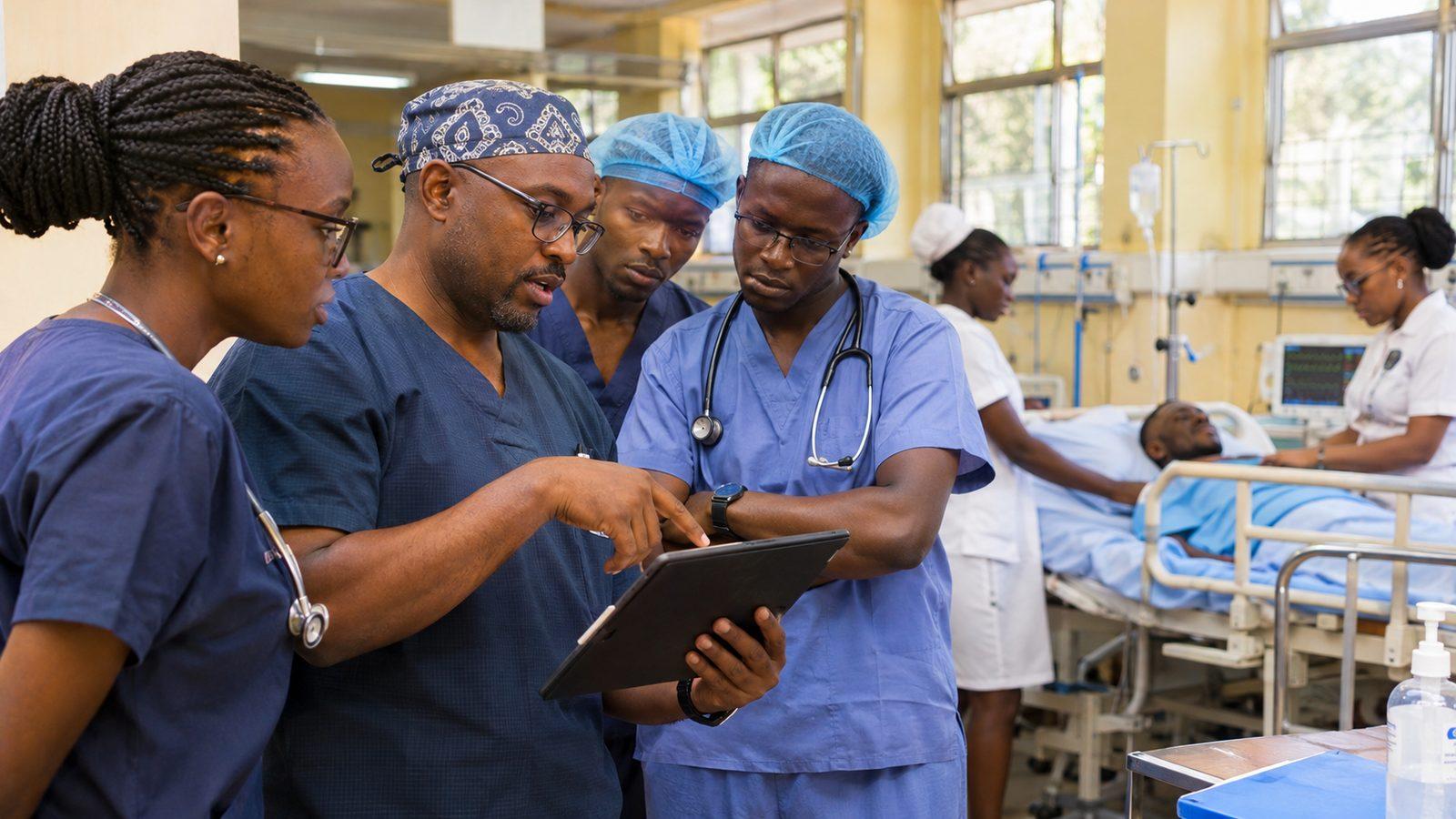
Our team works in both private practice and public hospitals in Mombasa. We see every day how distance, cost, staffing and equipment shape what happens to a surgical patient, and we believe the same standard of safe, timely surgery should be available to every Kenyan.
The work is led by Dr John Kinyua Murithi, FCS(ECSA), FACS, who heads emergency care at a public teaching and referral hospital in Mombasa and trains surgeons as COSECSA faculty. Experience in trauma surgery in Somalia and vascular training in Paris gives our approach a practical focus: improvements that work in public hospitals with limited resources.
The changes we advocate to make surgical and emergency care safer, more accessible and more affordable. Each links to the research behind it.
Structured assessments of theatres, equipment, staff, blood and imaging, using tools developed for Kenyan hospitals, to guide investment where it matters most.
More accredited surgical training posts outside the capital and employment pathways that keep newly qualified surgeons in the counties that need them.
Mentorship, skills training and teleconsultation for doctors operating in county hospitals, with clear referral pathways, so that more patients can be treated safely nearer home.
Documenting what patients pay for emergency operations and advocating for insurance coverage without upfront payment, so cost never delays life-saving care.
Early warning scores, clear escalation and high-dependency care for the highest-risk patients, because most deaths after surgery in Africa happen on the ward.
Routine reporting of deaths after surgery, using the Lancet Commission's definitions, as a core quality measure for every hospital that operates.
Recording every injured patient seen in emergency departments, using a standard Kenyan data set, so that hospitals can measure trauma outcomes and target improvements.
Tracking infections after major operations, checking that preventive antibiotics are given correctly, and using local culture results to choose them.
The peer-reviewed research that guides our work on surgical care in Kenya and sub-Saharan Africa, with a plain-language summary of each study.
Chaker S, Henry JA, Hung YC, et al. Ann Afr Surg. 2025;22(1):4-12
A national audit of Kenya's Level 4 public hospitals found that fewer than half had full theatre or anaesthesia equipment, and only about a third always had X-ray on site, so many patients must be referred for surgery.
Bekele A, Alayande BT, Iradukunda J, et al. World J Surg. 2024;48(4):829-42
Retention of COSECSA-trained surgeons remains high, but Kenya is among the countries losing some surgeons to other continents, a reminder that training must be matched by good jobs at home.
Falk R, Taylor R, Kornelsen J, et al. World J Surg. 2020;44(5):1368-86
Across 53 studies, non-specialist doctors provide much of the surgery in low-resource settings, yet few African countries offer them formal surgical training.
Ouma PO, Maina J, Thuranira PN, et al. Lancet Glob Health. 2018;6(3):e342-50
Nearly three in ten people in sub-Saharan Africa live more than two hours from a public hospital. Kenya does well on distance, with over 90% of people within two hours, so the bigger challenge is what those hospitals can provide.
Biccard BM, Madiba TE, et al; African Surgical Outcomes Study (ASOS) investigators. Lancet. 2018;391(10130):1589-98
In more than 11,000 surgical patients across 25 African countries, about one in five had a complication and patients were twice as likely to die after surgery as the global average. Nearly all deaths happened after the day of the operation, pointing to better ward monitoring as a priority.
GlobalSurg Collaborative. Lancet Infect Dis. 2018;18(5):516-25
Wound infection after bowel surgery affected almost one in four patients in low-income countries, and over a third of these infections resisted the antibiotic given to prevent them.
Botchey I, Hung Y, Bachani A, et al. Surgery. 2017;162(6S)
A registry of more than 14,000 injured patients at four Kenyan hospitals found road traffic crashes were the leading cause of injury, and showed that hospital trauma registries can guide improvements in emergency care.
Hutch A, Bekele A, O'Flynn E, et al. World J Surg. 2017;41(12):3046-53
Over four decades, 85% of surgeons trained in the COSECSA region stayed in the country where they trained, showing that regional training builds the local workforce.
Kempthorne P, Morriss WW, Mellin-Olsen J, Gore-Booth J. Anesth Analg. 2017;125(3):981-90
Most African countries have fewer than five physician anaesthesia providers per 100,000 people, a shortage that limits how many operations hospitals can safely perform.
O'Flynn E, Andrew J, Hutch A, et al. World J Surg. 2016;40(11):2620-7
East, Central and Southern Africa had about one specialist surgeon for every 200,000 people, with two-thirds working in the main commercial city of each country.
Shrime MG, Dare AJ, Alkire BC, et al. Lancet Glob Health. 2015;3 Suppl 2:S38-44
Around 81 million people a year face financial catastrophe from the cost of surgery and the travel, food and lost income that come with it, with the poorest hit hardest.
Meara JG, Leather AJM, Hagander L, et al. Lancet. 2015;386(9993):569-624
The Lancet Commission on Global Surgery showed that most of the world's population cannot access safe, affordable surgical and anaesthesia care when needed, and set out national indicators and surgical plans to close the gap by 2030.
Summaries are written for a general audience; please read the original papers for full findings. Last updated 9 November 2026.
We welcome collaboration with researchers, training programmes, hospitals, county health teams and funders working on surgical access, trauma systems and surgical training in East Africa. Email us at johnkinyua@gmail.com or send a WhatsApp message.